Fulbright Grant to Indonesia in 2027

Research
I am delighted to report that I have been awarded a Fulbright grant to return to Indonesia in 2027, where I will work with colleagues at the Fakultas Ilmu Sosial Ilmu Politik of Universitas Islam Negeri - Syarif Hidayatullah, Jakarta, on a large database project, "Documenting and Analyzing the Biographies of National Legislators in Indonesia." If BRIN approves my research permit application and my visa application process goes smoothly, I hope to start in Indonesia in January 2027 and work through November 2027. While I will be hosted by UIN-Syarif Hidayatullah in Ciputat, I also hope to see many friends and colleagues in Indonesia while I am there. Here is the research proposal as submitted to BRIN: Research Background and Aims: Indonesia has a strong and proud democratic tradition dating…

Read More

Manuscript Workshop on October 30, 2026 – Mainline Islam: Islamic Associational Life in Indonesia

Research
Delegates at the inaugural congress of Alkhairaat meet in Palu in 1956. Photo credit: Rustam Arsyad, courtesy of Abdul Basith Arsyad I am delighted to say that at the end of this month, colleagues at INSITE Middle East will host a manuscript workshop for my long-languishing project Mainline Islam: Islamic Associational Life in Indonesia. This book looks at the mass Islamic organizations in Indonesia over the last century, both documenting organizations from the outer islands that have been overlooked or misunderstood, and putting all the groups across the archipelago in comparative perspective with each other and with analogues around the Muslim world. This answers important questions in Indonesian studies and Islamic studies, including: Why is Indonesian Islam organized in this way? How have these organizations changed over the last century?…
Read More
Woolgar on Ethnic Politics in West Java

Woolgar on Ethnic Politics in West Java

History
One of the great joys of teaching is when one's students begin to produce awesome work and expand the field in new ways. I worked with a range of awesome graduate students while at Oxford, but today I get to be particularly proud of Dr. Matthew Woolgar, who has recently published an awesome article pushing the boundaries of our understanding of how and why the Indonesian Chinese community has been targeted for violence in specific incidents and calling for a fresh attention to sub-national dynamics in Cold War history. Matt came back to Oxford for graduate work after a Master's at SOAS and time studying Bahasa Indonesia in Yogyakarta, which means he was very prepared for deep fieldwork--even on sensitive subjects. His thesis on communism in West Java from the…
Read More
Diversity, Equity, and Inclusion in Indonesian Studies

Diversity, Equity, and Inclusion in Indonesian Studies

Academia
At last week's fantastic AIFIS-MSU Conference on Indonesian Studies, I was delighted to join and moderate a panel on "Diversity, Equity, and Inclusion in Indonesian Studies," alongside colleagues from around Indonesia and the US. (Sadly, we also recruited to awesome graduate students from the US and Indonesia to participate in the conversation, but neither of them was able to log in on that day to provide their planned contributions.) I thought it would be worthwhile to reflect on the reasoning behind the panel and on the discussion, given that the concept of Diversity, Equity, and Inclusion or "DEI" (especially in the context of higher education) have become such lightning rods. In researching Indonesia, there is an obvious long-standing division between people from Indonesia researching about the country, its people, its…
Read More
Article on the “Reconciliation” within NW

Article on the “Reconciliation” within NW

Contemporary Issues, Research
Supporters of NW-Anjani protest at the provincial office of the Ministry of Law and Human Rights on September 18, 2019 In the October 2022 issue of the Cornell-based journal Indonesia, I was very pleased to have an article with my colleague Dr. Saipul Hamdi of Universitas Mataram on the process of "reconciliation" in the Islamic organization Nahdlatul Wathan (based on Lombok) and the role of the national government in that process. You can see the full article at https://muse.jhu.edu/pub/255/article/869998/summary Here is the abstract: The Islamic organization Nahdlatul Wathan is the most influential religious group on the island of Lombok in West Nusa Tenggara province, but since the death of its founder in 1997 the group has been split between two factions. This article examines the conflict, its endurance, and especially…
Read More
Frank Porter Graham in Indonesia

Frank Porter Graham in Indonesia

History
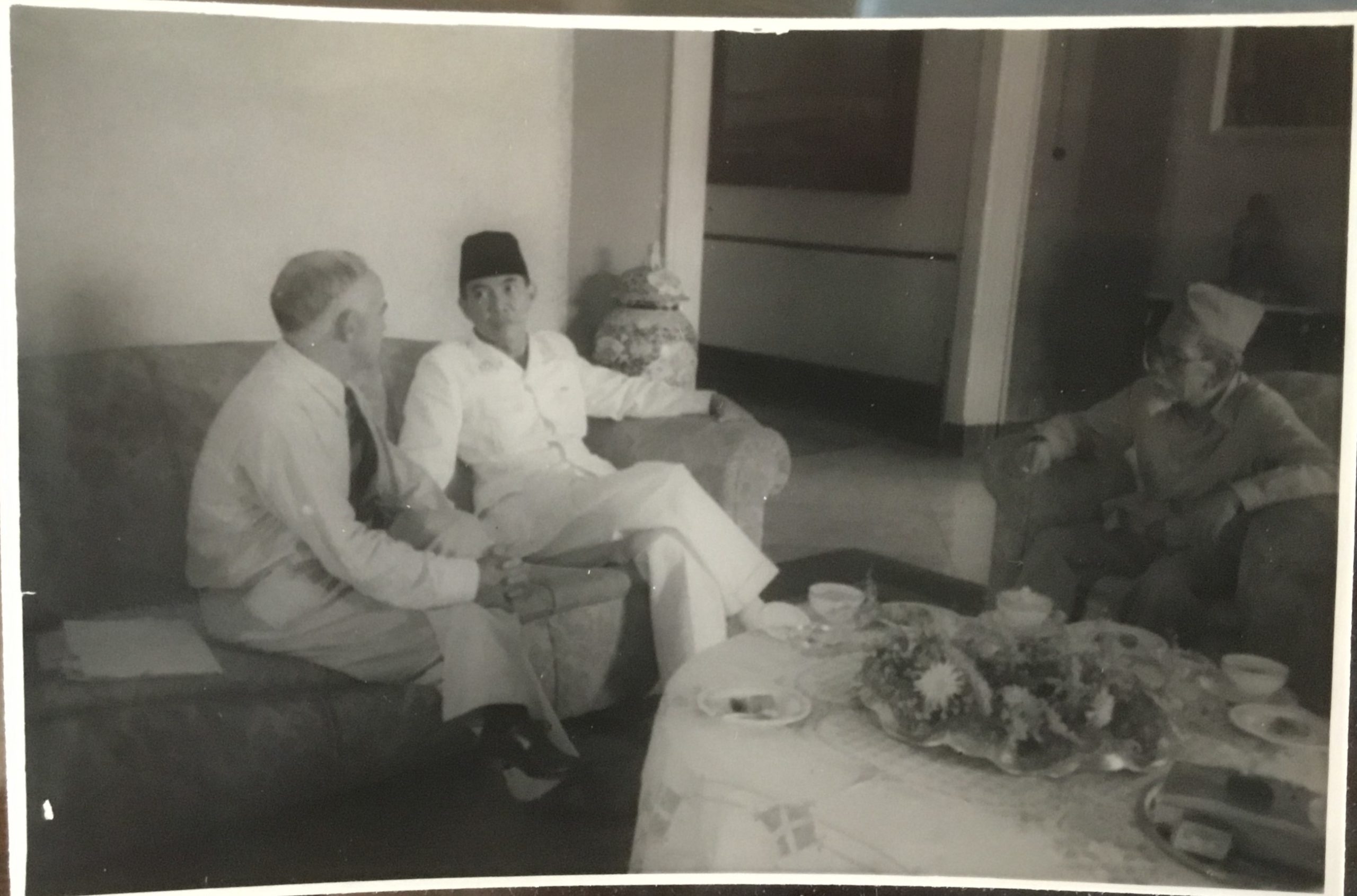
I recently created a small digital exhibit on the role of UNC President Dr. Frank Porter Graham on the UN Committee of Good Offices for Indonesia, leading up to the Renville Agreements of January 1948. Dr. Frank (as he was known) was an unusual choice to join the committee as the US representative, since he had no diplomatic experience per se. He had served in several mediator roles and on national committees for the US government, but this role with the United Nations was a big change. In many ways, his work with the UN on Indonesia was later overshadowed by his much longer service on a UN committee for India and Pakistan, which was less successful in achieving a concrete diplomatic outcome. In the course of creating the exhibit,…
Read More
Old Post: Revisionist NU History

Old Post: Revisionist NU History

Contemporary Issues, History
This post was originally from May 22, 2018. In today’s Jakarta Post, K.H. Yahya Cholil Staquf (a leader in Indonesia’s Nahdlatul Ulama and its outreach Bayt ar-Rahmah in North Carolina) has written another piece in his consistent call for the separation of Islam and politics and moderation in religion generally, this one generically titled “Islamist Politics in ‘Reformasi’ Indonesia.”The article is a fine statement of the NU leadership’s opposition to transnationally-oriented Islamism and commitment to the Indonesian state, but it also includes a highly revisionist (I would argue, unsustainably revisionist) interpretation of NU’s history vis-à-vis Islam and the state. In the passage that surprised me most as a historian of Indonesia, the kyai writes, “During the 1950s and ‘60s, [Abdul] Wahab [Hasbullah, then leader of NU] blocked Masyumi from restoring the Jakarta Charter and transforming…
Read More

Old Post: New Article on Charisma in Alkhairaat

Research
This post was originally from May 25, 2018. This week, my article about " Reinforcing Charisma in the Bureaucratisation of Indonesian Islamic Organisations" has been published in the Journal of Current Southeast Asian Affairs. Here's the abstract: Many studies of Islam in Indonesia have focused on the mass Islamic organisations that form the backbone of civil society and Indonesian religious life. However, studies of these organisations have not appreciated the central place of charisma amid their bureaucratic features. This article looks at the case of Alkhairaat, a mass Islamic organisation headquartered in Central Sulawesi but spread throughout eastern Indonesia, as a bureaucracy built to reinforce and perpetuate the charisma of its founder, Sayyid Idrus bin Salim al-Jufri. The case of Alkhairaat demonstrates how mass Islamic organisations in Indonesia bureaucratise Islam but…
Read More

Old Post: Will, or Can, UMNO Follow Golkar’s Road Back into Government?

Uncategorized
This post was originally from May 28, 2018. As everyone has now seen, Malaysia made history this month by breaking the hold of the United Malay Nationalist Organization over parliament for the first time since independence. Of course, the new coalition that has come to power is led by a 92-year-old man (fellow blogger) who led UMNO (indeed, his name was almost synonymous with UMNO) for several decades. Rather than spend this blog post rejoicing with the Malaysian people over the exercise of democracy or digging through the full and fascinating history of Dr. M leading Malaysia, I thought it might be more interesting to look to Malaysia’s future by using an example from Indonesia’s past and present. Somewhat like UMNO, the Indonesian political party (or, initially, non-party / party alternative) Golkar emerged as an elite…
Read More

Old Post: Academic Freedom under Threat in Indonesia

Uncategorized
This post was originally from June 10, 2018. Two news items from the last week have me seriously concerned about academic freedom in Indonesia (again). This is unlikely to be a real issue in the upcoming provincial and local elections this month, or even in the national elections next year, but it is something that colleagues both inside and outside the country should be watching. Inside the country, the leading national university in Yogyakarta, Universitas Gadjah Mada, has apparently brought down sanctions on two lecturers in the Faculty of Engineering for their affiliation to the now-banned organization Hizbut Tahrir Indonesia. As Ed Aspinall noted recently, the banning of HTI itself was a cause for concern about authoritarian trends in the country, but the sanction of lecturers in this way echoes the excesses of Turkey and brings new…
Read More